Frothing Milk with a Steam Wand: How to Get It Right
Fine milk foam doesn’t happen by chance. It comes from two clearly separate phases: drawing in air and letting the milk roll. This guide shows you how to get glossy microfoam from your steam wand and which mistakes get in the way.
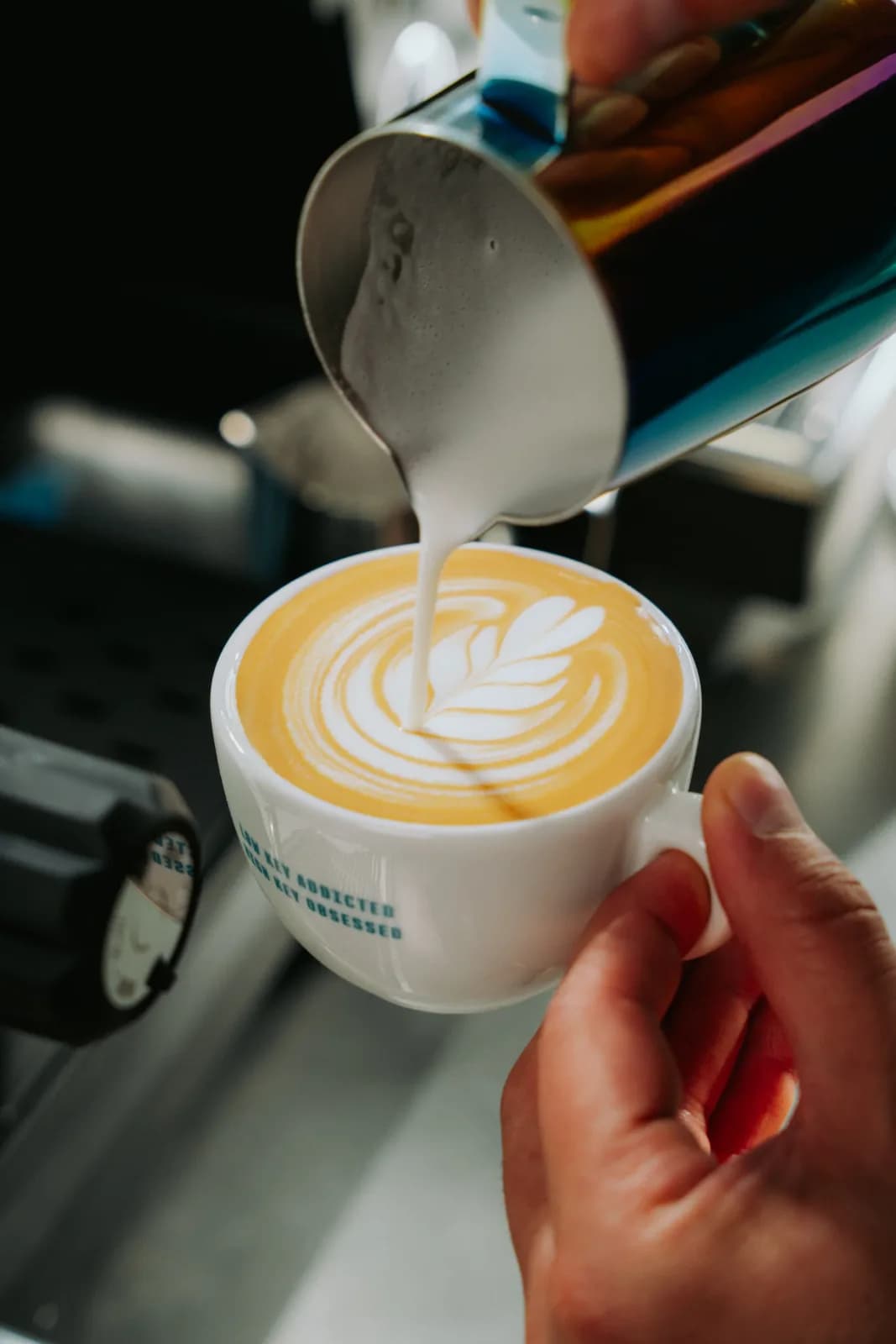
What makes good milk foam
Good milk foam for a cappuccino or flat white is not a stiff mountain of big bubbles but microfoam: a glossy, creamy texture with bubbles so fine you can barely see them. It flows like liquid paint, blends with the espresso and tastes sweeter than cold milk.
While frothing, the steam heats the milk and air is drawn in at the surface. The proteins wrap around the bubbles and stabilise them, the fat adds creaminess. The aim is to bring in exactly as much air as the drink needs and then spread it so finely that no visible bubbles remain.
Which milk works
Microfoam is easiest with fresh whole milk at 3.5 % fat. It foams reliably, stays stable and tastes round. Low-fat milk often foams up even more, but the foam is drier, coarser and collapses faster. Lactose-free milk handles much like regular whole milk, but tastes a little sweeter because the lactose has been broken down.
| Type of milk | Foaming behaviour | Note |
|---|---|---|
| Whole milk 3.5 % | stable, creamy, glossy | best choice for learning |
| Low-fat milk 1.5 % | lots of volume, rather dry | less suited to latte art |
| Lactose-free whole milk | similar to whole milk | tastes a little sweeter |
| Oat drink, barista edition | good, slightly less stable | don’t let it get too hot |
| Oat drink, standard | often thin, breaks down quickly | usually unsuitable for microfoam |
| Soy drink | foams well | can curdle in acidic espresso |
With plant-based drinks a barista edition is almost always worth it. These versions usually contain added vegetable oil and acidity regulators so the foam stays stable and doesn’t curdle in the espresso. A regular oat drink from the supermarket, by contrast, often foams only briefly and collapses after a few seconds. Plant-based drinks are also less forgiving with heat: stay towards the lower end of the temperature range.
Whatever you use, the milk should be fridge-cold. Cold milk gives you more time before you reach the target temperature, and with it more room to draw in air and texture the foam finely.
The right temperature
As a guideline, heat milk for espresso drinks to about 55–65 °C. In this range milk tastes sweetest, and the drink can be enjoyed right away. From about 70 °C the proteins change noticeably, the milk takes on a cooked taste, the sweetness fades and the foam becomes unstable. Milk for a cappuccino should never boil.
Without a thermometer your hand helps: place it flat against the side of the jug. When it gets so warm that you just don’t want to keep it there any longer, you’re at roughly 60 °C. A clip-on milk thermometer is still a good aid for the first few weeks, until you’ve developed a feel for it.
The right jug
The milk jug, also called a pitcher, should be stainless steel with a pointed spout. Its size depends on how much milk you need, because the jug must be neither too full nor too empty.
- A jug of about 350 ml is enough for one cappuccino or flat white.
- With about 600 ml you can froth milk for two cappuccinos or one large latte macchiato.
- Fill the jug only to just below the base of the spout, roughly a third full. The foam needs room to rise.
- Too little milk is just as tricky: the wand can’t create a stable whirlpool, and the milk heats up too quickly.
Stretching and texturing: the two phases
The first phase is called stretching. The tip of the steam wand sits just below the surface of the milk so that it draws in air. You hear a steady, quiet hiss, a bit like paper tearing. A loud screech means the tip is too deep; bubbling and spitting mean it is too high. The milk visibly grows in volume.
The second phase is texturing, or rolling. You lower the wand a little deeper so no more air gets in and position it slightly off-centre. This creates a whirlpool that spins the milk around the jug. Large bubbles are broken up, the air is finely distributed and the surface turns smooth and glossy. This phase lasts until you reach the target temperature.
How long you stretch depends on the drink. As a guideline: for a flat white or latte only briefly, until the volume has risen by about a fifth to a quarter. For a cappuccino longer, until there is about a third to half more volume in the jug. Only stretch while the milk is still cool, roughly until it feels lukewarm. After that you can hardly build fine foam. Which amount of foam suits which drink is covered in our guide to cappuccino, latte and flat white.
Step by step: frothing milk with a steam wand
- Fill a cold jug with fridge-cold milk to just below the spout.
- Purge the steam wand briefly into a cloth or the drip tray so condensation doesn’t end up in the milk.
- Hold the wand tip just below the surface of the milk, slightly off-centre, with the jug tilted a little.
- Open the steam fully. Only dip in or hold the position once the steam is running, otherwise the milk will spray.
- Stretch: keep the tip close to the surface until you hear the steady hiss. Slowly lower the jug as the milk rises.
- Once you have enough volume, at the latest when the milk feels lukewarm, dip the wand a little deeper.
- Texture: keep the whirlpool going until the milk reaches about 55–65 °C or the jug gets too hot to hold.
- Close the steam valve, and only then take the wand out of the milk.
- Wipe the wand immediately with a damp cloth and purge it briefly.
- Tap the jug on the counter once or twice to release any large bubbles, and swirl the milk until it shines evenly.
- Pour into the espresso quickly, before foam and liquid milk separate.
Typical mistakes and what helps
- Big bubbles and dry foam: stretched too long or too deep, or the tip slipped out of the milk. Draw in less air and texture for longer.
- Hardly any foam, just hot milk: the tip was too deep. Next time, start closer to the surface.
- Loud screeching: wand too deep or too central. Raise it a little and position it off-centre.
- Milk tastes cooked: it got too hot. Stop earlier, use a thermometer.
- Foam separates in the cup: you waited too long. Keep swirling the milk until you pour.
- Plant-based drink curdles: too hot or not a barista product. Froth it cooler and use a barista edition.
Cleaning the steam wand
Milk residue on the hot wand dries within seconds and forms a crust. So after every use: wipe it straight away with a dedicated damp cloth and purge the wand briefly to push any milk that has been sucked in out of the holes. Use that cloth for the wand only and change it daily.
If you use it a lot, give the wand a more thorough clean once a day: stand the tip in hot water with milk system cleaner, let it soak and purge it well. Clogged tips can be unscrewed and cleared with a fine needle. They are a common reason why foam suddenly stops working.
Milk foam without a portafilter machine
You can get usable foam without a steam wand too, although rarely as fine as microfoam. First heat the milk in a pan or in the microwave to about 60 °C, because handheld frothers and French presses don’t produce heat.
- French press: fill about a third with warm milk, put the lid on and move the plunger up and down briskly 20 to 30 times, the last strokes only near the top. Then tap and swirl the press. This comes surprisingly close to microfoam.
- Electric handheld frother: hold the whisk at an angle just below the surface until the volume is right, then dip it deeper so the bubbles get finer. Afterwards tap and swirl.
Practising milk foam
Microfoam takes practice. It helps to stick to one milk and one jug until the movement feels natural. If you then want to pour patterns, the latte art heart is the classic place to start. If you’d rather learn the technique with direct feedback: the Rocademy at our café in Maxvorstadt runs a latte art course that focuses on milk foam and pouring.
Frequently asked questions
How hot should milk for a cappuccino be?
As a guideline about 55–65 °C. In this range milk tastes sweetest. From about 70 °C it tastes flat and the foam becomes unstable.
Why is my milk foam coarse and bubbly?
Usually too much air was drawn in, or too late, or the texturing phase was too short. Only stretch while the milk is cool, then let it spin in the whirlpool until the surface shines.
Which oat drink works for frothing?
A barista edition is best. It usually contains added oil and acidity regulators so the foam holds and doesn’t curdle in the espresso. Froth oat drinks towards the lower end of the temperature range.
Can I froth milk a second time?
It’s best not to. Milk that has already been heated hardly forms fine foam again and quickly tastes cooked. Only froth the amount you need right away.
How often do I need to clean the steam wand?
Wipe and purge it immediately after every use. If you use it a lot, also soak it once a day in milk system cleaner and check the holes in the tip.