How to Make Espresso with a Portafilter, Step by Step
A good espresso from a portafilter is no accident. It is the result of a handful of variables you can measure and change on purpose. This guide gives you a reliable base recipe, walks you through the process from grinding to cup and shows you how to spot typical faults in the shot.
How espresso is made
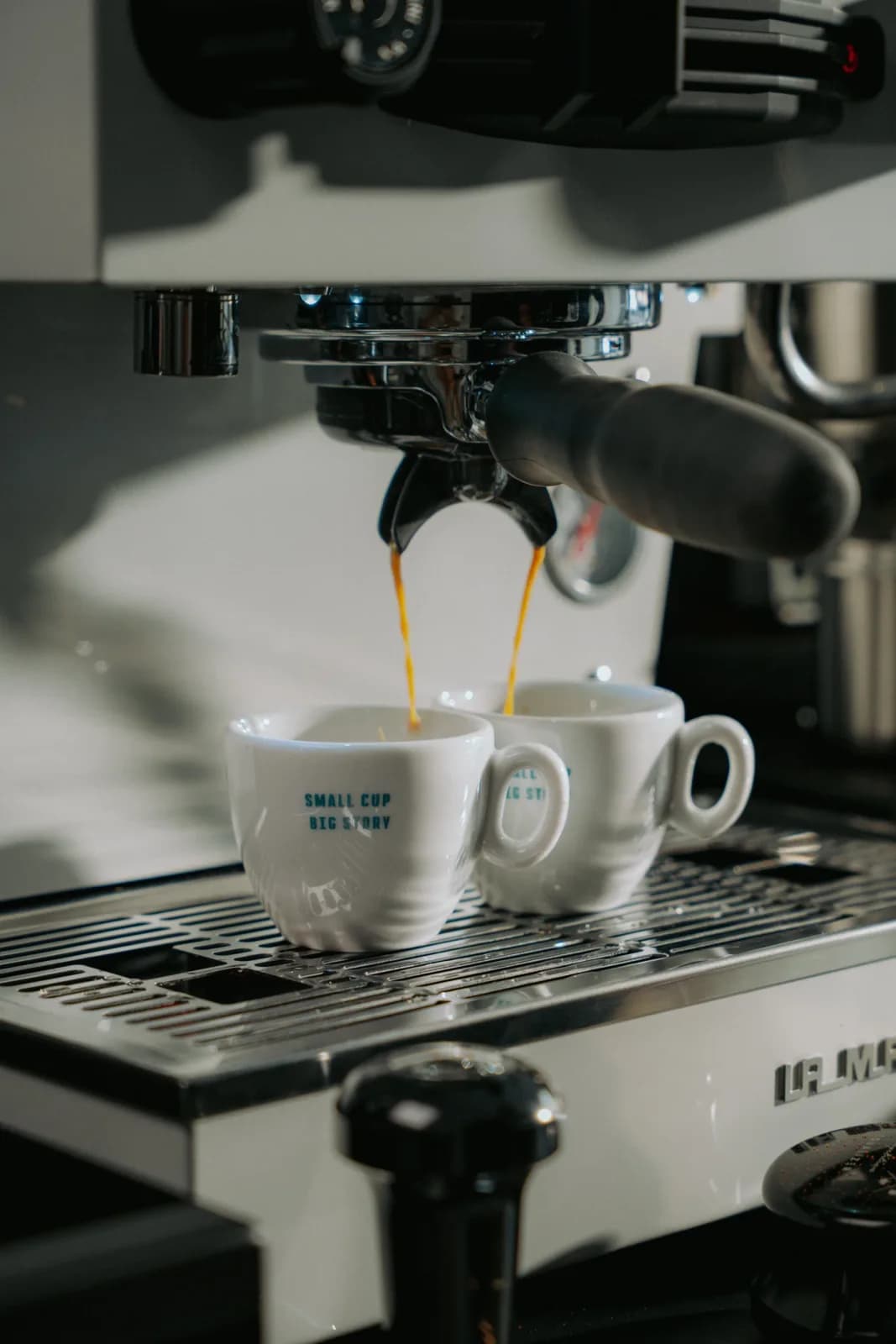
To make espresso, the machine forces hot water at high pressure through a finely ground, compacted puck of coffee. In a short time the water dissolves acids, sugars, oils and bitter compounds and emulsifies part of them into crema. Because everything happens so fast and so concentrated, even small deviations in dose, grind size or distribution clearly show up in the taste.
The good news: you don’t have to guess. With a scale, a timer and a fixed recipe you can repeat every shot and improve it step by step. That is exactly what this guide is about.
What you need
- A portafilter machine that delivers stable brew pressure and a constant temperature
- An espresso grinder that grinds fine and adjusts in small steps
- A scale with 0.1 g accuracy and a timer that fits under the portafilter
- A tamper that matches the diameter of your basket
- Optional: a distribution tool with fine needles (WDT) and a knock box
- Freshly roasted espresso, bought as whole beans
The grinder matters more than the machine. An average machine with a good grinder usually delivers better results than the other way round, because an even, finely adjustable grind is the foundation of every extraction.
The base recipe as a guideline
| Parameter | Guideline |
|---|---|
| Dose (double basket) | 16–20 g, often 18 g |
| Yield in the cup | about twice the dose, e.g. 36 g |
| Ratio | approx. 1:2 |
| Shot time | approx. 25–30 seconds from pump start |
| Brew pressure | approx. 9 bar |
| Water temperature | approx. 90–96 °C, often 92–94 °C |
These numbers are guidelines, not laws. With most beans they quickly get you into a drinkable range. From there, your taste decides. A ristretto sits closer to 1:1 to 1:1.5 and tastes denser and sweeter, a lungo at 1:3 and above, with more volume and less intensity.
Weigh the yield in grams rather than millilitres. Crema distorts any volume reading, while the scale stays honest. Note down dose, yield and time for every shot until you have found your recipe.
Step by step to your espresso
- Let the machine heat up fully, 15 to 30 minutes depending on the model. Keep the portafilter locked in so it warms up too.
- Run a short flush without the portafilter. This rinses coffee residue out of the group head and stabilises the temperature.
- Remove the portafilter, wipe it with a dry cloth and place it on the scale. Tare the scale.
- Grind the dose straight into the portafilter, for example 18 g. Grind just before brewing, never in advance.
- Distribute the grounds: break up clumps with a needle tool or tap the side of the portafilter gently until the surface is level.
- Tamp level. Even, firm pressure is enough; what matters is that the puck is flat and that you work the same way every time.
- Clear loose grounds from the rim of the basket, lock in the portafilter and start straight away. Leaving it on the hot group for long burns the grounds on the surface.
- Place cup and scale underneath and start the timer with the pump.
- Stop at your target yield, for example at 36 g. Note the time.
- Taste, knock out the puck, rinse the basket and lock the portafilter back in.
Distribution and tamping: why they matter so much
Water always takes the path of least resistance. If the grounds are looser or thinner in one spot, more water flows through there. Those areas get over-extracted while the rest stays under-extracted. This is called channeling. The cup then tastes sour and bitter at the same time, even if the time looks right.
Good distribution is therefore more important than high tamping pressure. Whether you press with 10 or 20 kilograms matters less than is often claimed; beyond a certain point the puck is compacted anyway. Above all, make sure you set the tamper down straight and don’t twist it afterwards or knock on the portafilter.
Temperature and roast
Brew temperature shifts the flavour profile. Higher temperatures extract more and faster, which helps light roasts that are dense and harder to dissolve. Dark roasts, on the other hand, give up their bitter compounds readily and often taste rounder at a slightly lower temperature. Change the temperature in steps of one to two degrees, and only once dose, ratio and time are already right.
The roast date counts too. Very freshly roasted coffee is still releasing a lot of CO₂, runs unevenly and forms a bubbly crema. Many espresso roasts taste more balanced after a few days of rest. A chocolatey, forgiving bean like the Espresso El Boxeador is a good place to start.
Spotting faults
- Pale, watery, through in under 20 seconds: grind too coarse or dose too small. The cup tastes thin and sharply sour.
- Dripping, very dark, well over 35 seconds: grind too fine or too much coffee in the basket. The espresso tastes dry and bitter.
- The stream sprays, starts on one side or turns pale early: a sign of channeling caused by poor distribution or uneven tamping.
- Wet, sloppy puck with an imprint of the shower screen screw: basket overfilled or too little headspace for the dose.
- Thin crema that disappears quickly while the time is otherwise right: often old beans that hold hardly any CO₂.
Shot time is your first clue, taste has the final say. How to fine-tune with the grinder is explained in our guide to espresso grind size.
Practise with guidance
Much of what happens at the portafilter you learn fastest when someone looks over your shoulder while you distribute, tamp and taste. In the Rocademy, our courses at the café in Maxvorstadt, you work on exactly these basics, for example in the Espresso Essentials course.
Sources
Frequently asked questions
How much coffee goes into a double espresso?
As a guideline 16 to 20 grams, depending on the basket size. Many double baskets are designed for about 18 grams; the number is often printed on the basket.
When do I start timing the shot?
The usual approach is from pump start, so including any pre-infusion. What matters most is that you always measure the same way, so your numbers stay comparable.
Do I really have to weigh every time?
While you are looking for your recipe, yes. Without a scale you can’t tell whether the dose or the grind size made the difference. Later, a spot check after every change of beans is often enough.
Does a lot of crema say anything about quality?
Only to a degree. Crema mainly shows that the coffee is fresh and contains enough CO₂. It tells you nothing about flavour or balance.
Why does my espresso taste sour and bitter at the same time?
Usually because of uneven extraction, in other words channeling. Improve the distribution in the basket and tamp level first, before you touch the grind size.