Espresso vs Filter Coffee: What Sets Them Apart?
Espresso and filter coffee can come from the same bean and still taste completely different. The difference lies in pressure, grind size, time and often the roast as well.
Pressure and brewing
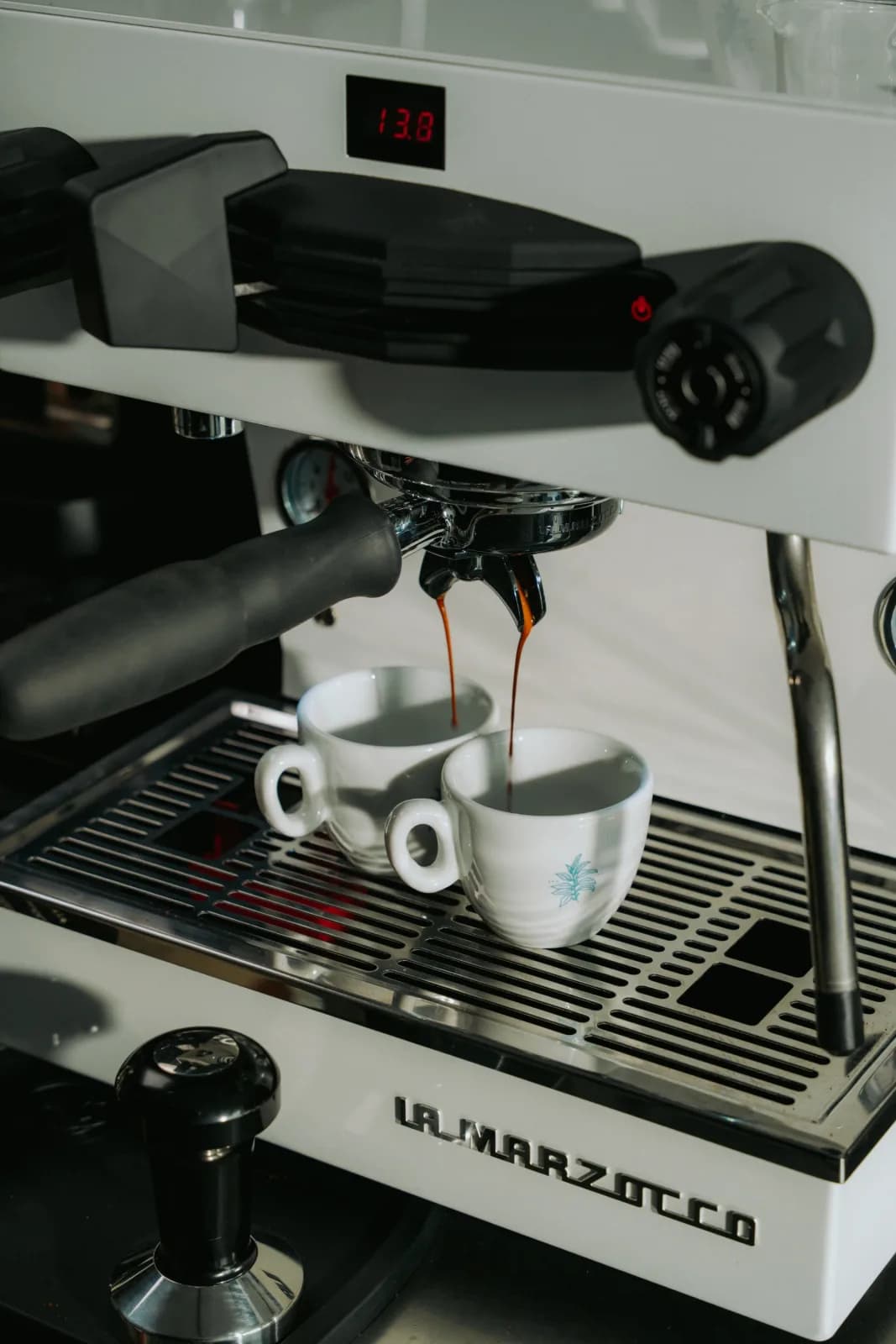
Espresso is made under pressure. An espresso machine forces water at around 9 bar through a firmly tamped puck of coffee. A shot typically takes 25 to 30 seconds, turning about 18 g of coffee into roughly 36 g of espresso. The result is concentrated, syrupy and topped with crema.
Filter coffee relies on gravity alone. Hot water flows without pressure through a loose coffee bed and a paper filter. The contact time is much longer at several minutes, and the ratio is more like 1:15 to 1:17. The cup is lighter and clearer, and it shows delicate aromas in more detail.
The differences at a glance
| Feature | Espresso | Filter coffee |
|---|---|---|
| Pressure | approx. 9 bar | no pressure, just gravity |
| Grind size | very fine, almost like flour | medium-fine to medium |
| Brew ratio | about 1:2 | about 1:15 to 1:17 |
| Contact time | 25–30 seconds | approx. 2:30–5 minutes |
| Typical roast | often slightly darker, aiming for sweetness and body | usually lighter, aiming for acidity and clarity |
| Texture | dense, oily, with crema | light, clear, tea-like |
| Caffeine per ml | much higher | lower |
| Caffeine per cup | usually lower | usually higher |
Grind size and roast profile
Because espresso only has a few seconds of contact, it needs a very fine grind with a large surface area. For filter coffee, the same grind would be far too fine: the filter would clog and the cup would taste over-extracted and bitter.
Many roasters roast espresso a little longer or darker. That brings out sweetness and body, softens the acidity and works well with milk. Filter roasts are usually lighter so the fruitiness and origin character come through. This line isn’t rigid; it’s a question of what the roaster is aiming for.
Caffeine: per cup or per milliliter?
Espresso is considered strong, and per milliliter that’s true: it’s many times more concentrated than filter coffee. But a cup of espresso is only 30 to 40 ml. So a large mug of filter coffee often contains more caffeine overall than a single espresso, even though it tastes milder.
Exactly how much caffeine ends up in your cup depends on the dose, the type of bean and the brewing method. If you want coffee in the evening, a decaf is a better bet than a smaller espresso.
Taste: what can you expect?
- Espresso: intense, round, chocolatey or nutty, with full body. Ideal on its own or as the base for a cappuccino or flat white.
- Filter coffee: transparent and layered. Fruity, floral or tea-like notes stand out more clearly, and the cup evolves as it cools.
An example from our range: Espresso El Boxeador from Mexico shows milk chocolate and hazelnut, while a filter coffee like Indonesia Agosmaya really shows off its origin in the filter.
Can you use espresso beans for filter coffee?
Yes, you can use espresso beans for filter coffee. Just grind them as coarse as any filter coffee and brew at the usual ratio. Expect a chocolatey, full-bodied cup with low acidity. Because espresso roasts dissolve more easily, a slightly lower temperature of 90–92 °C helps prevent bitterness.
The other way around, light filter roasts only work to a limited extent in an espresso machine. They quickly turn very sour and need a lot of fine-tuning at the machine.
French press or filter coffee?
The French press is a full-immersion method: coffee and water steep together for about four minutes, then a metal mesh separates the grounds. Since no paper filters the coffee, oils and fine sediment stay in the cup. The result is fuller and heavier, but less clear than filter coffee. If you’re after delicate fruit aromas, paper filters are the better choice; if you like body, go for the French press.
Bean-to-cup machine or filter coffee?
A bean-to-cup machine makes espresso-style drinks under pressure and stretches them with extra water for a café crème. It’s convenient, but you have little control over grind size, temperature and contact time, and not every bean shows its strengths there. Filter coffee takes a few more minutes of attention, but in return it gives you full control and clearly reveals the differences between origins.
If you really want to understand espresso machines, Espresso Essentials at the Rocademy at Kreittmayrstraße 5 is the right place to start, for €160.
Frequently asked questions
Does espresso have more caffeine than filter coffee?
Per milliliter yes, per cup usually not. A large mug of filter coffee often contains more caffeine in total than a single espresso.
Can I use espresso beans for filter coffee?
Yes. Grind them coarse as for filter and brew at a ratio of 1:15 to 1:17. The cup will be chocolatey and low in acidity; a slightly lower temperature prevents bitterness.
Which is better: French press or filter coffee?
It’s a matter of taste. The French press gives you more body and oils, while paper filters give you more clarity and finer aromas.
Is espresso roasted darker than filter coffee?
Often, but not necessarily. Espresso is frequently roasted for sweetness and body, while filter coffee tends to be lighter to preserve acidity and origin flavors.