
Cappuccino, Latte, Flat White and More: What’s the Difference?
All of these drinks are made from espresso and milk, and yet they taste distinctly different. What matters is the ratio of coffee to milk, the amount and texture of the milk foam and the size of the cup.
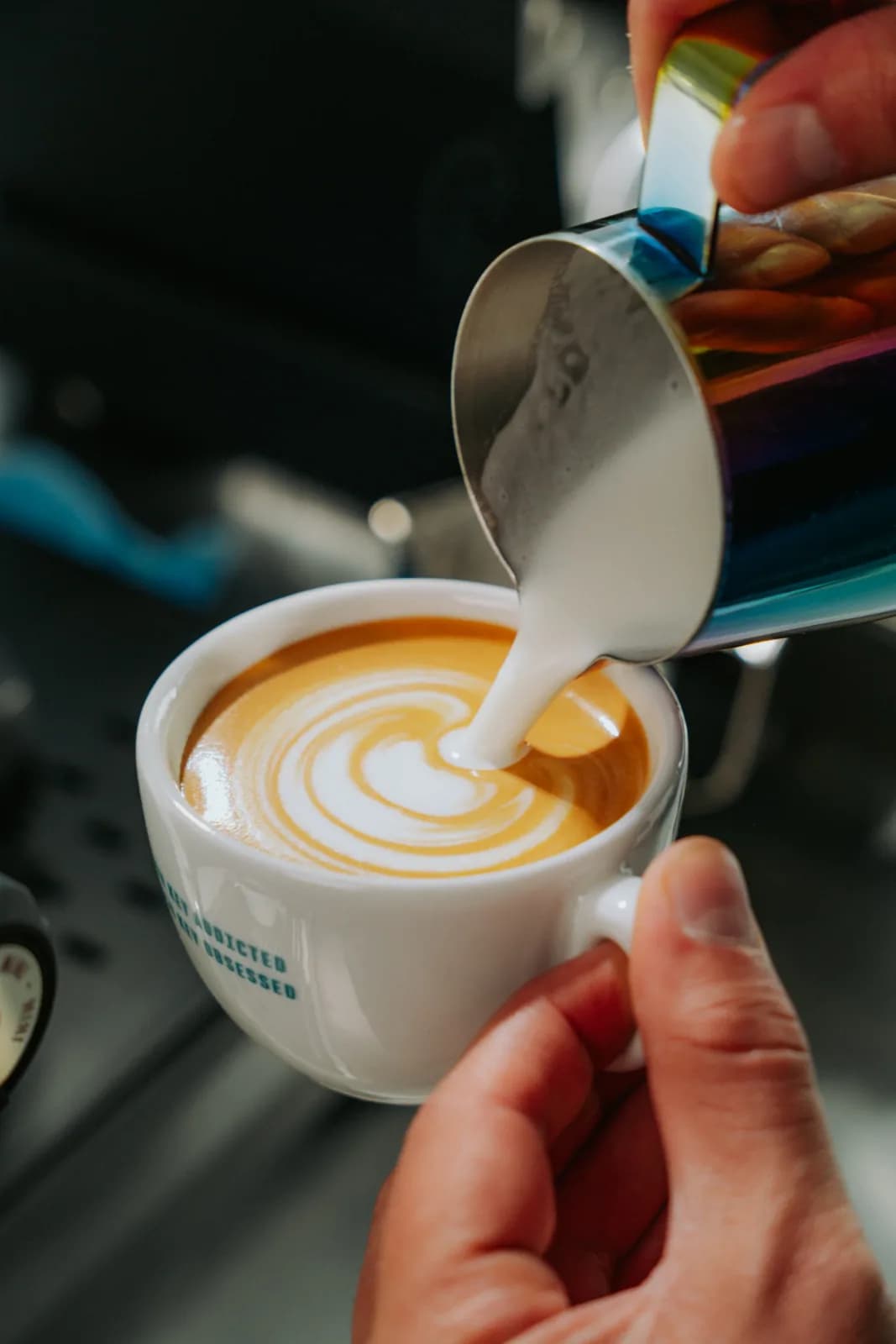
Three variables make the difference
Whether a drink tastes strongly of coffee or rather mild and milky depends above all on how much milk goes with one espresso. Then there is the layer of foam: airy, tall foam makes a drink feel lighter in the mouth, while thin, silky microfoam blends closely with the espresso. The third variable is the vessel, because a 300 ml cup takes very different proportions than a small glass.
Worth saying up front: there are no fixed, universally binding recipes for any of these drinks. Every café interprets them a little differently, and habits vary between countries too. The figures below are typical values you can use as orientation.
Overview with typical volumes
| Drink | Espresso | Milk and foam | Typical size |
|---|---|---|---|
| Cortado | single or double | about the same amount of warm milk, hardly any foam | approx. 90–120 ml |
| Flat white | double, often pulled shorter | silky milk, very thin layer of foam | approx. 150–180 ml |
| Cappuccino | single or double | milk with a good 1 cm of fine foam | approx. 150–200 ml |
| Caffè latte | single or double | lots of milk, thin layer of foam | approx. 250–350 ml |
| Latte macchiato | single or double | lots of milk, espresso poured into the milk, layers in the glass | approx. 250–350 ml |
Volumes vary considerably from café to café. Some serve their cappuccino in the classic small cup, others in a much larger one. If you like a drink at a particular café, it’s worth asking briefly about the size and the amount of espresso.
Cappuccino
The cappuccino comes from Italy and is probably the best-known espresso-based milk coffee. Traditionally it is often described in thirds: espresso, hot milk and foam. Today many specialty cafés work with finer foam than in the past, which blends better with the espresso and allows latte art. The coffee stays clearly noticeable, while the foam gives a soft, light mouthfeel.
Flat white
The flat white is credited to Australia and New Zealand; both countries claim to have invented it. It is usually smaller than a cappuccino, but often has a double espresso and only a whisper-thin layer of microfoam. That makes it taste more coffee-forward and feel creamy rather than airy. The milk is steamed so that it shines and pours like liquid cream.
Caffè latte and latte macchiato
A caffè latte is essentially a large, milk-forward espresso drink with little foam. It tastes mild, and the coffee aromas step back behind the sweetness of the milk. Outside Italy it is often simply called a latte. A word of caution in Italy: if you order just a latte there, you’ll get a glass of milk.
The latte macchiato reverses the order. Hot, frothed milk goes into the tall glass first, then the espresso is slowly poured in. Macchiato means stained: the milk is stained by the coffee. Because espresso, milk and foam have different densities, visible layers form. In taste it is usually the mildest drink of the lot. Not to be confused with the espresso macchiato, an espresso with a small dollop of milk foam.
Cortado
The cortado comes from Spain; the name derives from cortar, to cut. The espresso is cut, or softened, with about the same amount of warm milk, without much foam forming. The result is small, strong and pleasantly round. If you find a cappuccino too milky but a straight espresso too intense, a cortado is often a good middle ground.
The milk makes the difference
In every one of these drinks, the milk texture shapes the taste. Ideal is a temperature of about 55 to 65 °C, as a guideline. In this range milk tastes sweetest; much hotter and it loses sweetness and can taste cooked. How to get silky microfoam is explained in our guide to milk frothing with a steam wand.
- For cortado and flat white: draw in hardly any air, mostly let the milk roll.
- For cappuccino: draw in air a little longer, until the volume clearly increases.
- For latte and latte macchiato: more milk; for the latte little foam, for the latte macchiato enough foam for the top layer.
- Plant-based drinks behave differently from cow’s milk. Barista versions usually foam more stably.
Which drink suits you
If you want to clearly taste the coffee, go for a cortado or flat white. If you like it balanced with soft foam, the cappuccino is the right choice. For a mild, large coffee, a caffè latte or latte macchiato works well. With fruity, light espresso roasts, milky drinks can sometimes taste unexpectedly tart; chocolatey roasts usually pair more easily with milk.
If you want to learn to pour milk and create patterns, you can practise in the Rocademy at our café in Maxvorstadt, for example in the latte art course.
Sources
Frequently asked questions
Which has more caffeine, a cappuccino or a flat white?
That depends on the amount of espresso, not the name. A flat white is often made with a double espresso and then contains more caffeine than a cappuccino with a single shot.
Is a latte the same as a latte macchiato?
No. With a caffè latte the milk goes into the espresso; with a latte macchiato the espresso is poured into the milk, which creates visible layers. A latte macchiato usually has more foam, too.
Why is the cappuccino a different size in every café?
Because there is no binding standard. Every café decides cup size, amount of espresso and foam height for itself.
Which milk works best?
Whole milk foams especially creamy and tastes sweet. For plant-based alternatives, barista versions are usually the better choice because they foam more stably.
What is a cortado?
A small Spanish espresso drink with about the same amount of warm milk and hardly any foam. In taste it sits between an espresso and a flat white.