Filter Coffee Without a Machine: How to Brew Coffee by Hand
You don’t need a machine for great coffee, often not even electricity. Here are six ways to brew coffee by hand, from a pour-over dripper to a pot over a gas stove.
What you’ll need no matter what
Whichever method you choose, three things make or break the cup: hot water that isn’t at a rolling boil, freshly ground coffee at the right grind size, and a sensible coffee to water ratio. As a guideline, use about 60 g of coffee per liter of water and a water temperature of around 92 to 96 °C. Our guide to the coffee to water ratio explains this in more detail.
You don’t need electricity. You can heat the water on a gas stove, a camping stove or over a fire. If you don’t have a thermometer, bring the water to a boil, take it off the heat and wait about 30 seconds to a minute. Then it’ll be roughly in the right range.
The methods at a glance
| Method | What you need | Grind size | Taste |
|---|---|---|---|
| Pour-over | Dripper, paper filter, carafe | medium-fine, like coarse sand | clear, clean, highlights acidity and aromas |
| French press | Press with metal mesh and plunger | coarse, like coarse sea salt | full-bodied, oily, some sediment |
| Coffee sock / cloth filter | Cotton filter, vessel | medium to medium-fine | round, soft, between paper and metal |
| Pot method | Pot, spoon, cup | coarse | strong, rustic, slightly cloudy |
| AeroPress | AeroPress, small paper filters | fine to medium-fine | clean, light to concentrated depending on the recipe |
| Paper towel | Unprinted paper towel, sieve or funnel | medium | makeshift, often papery |
1. Pour-over: the classic
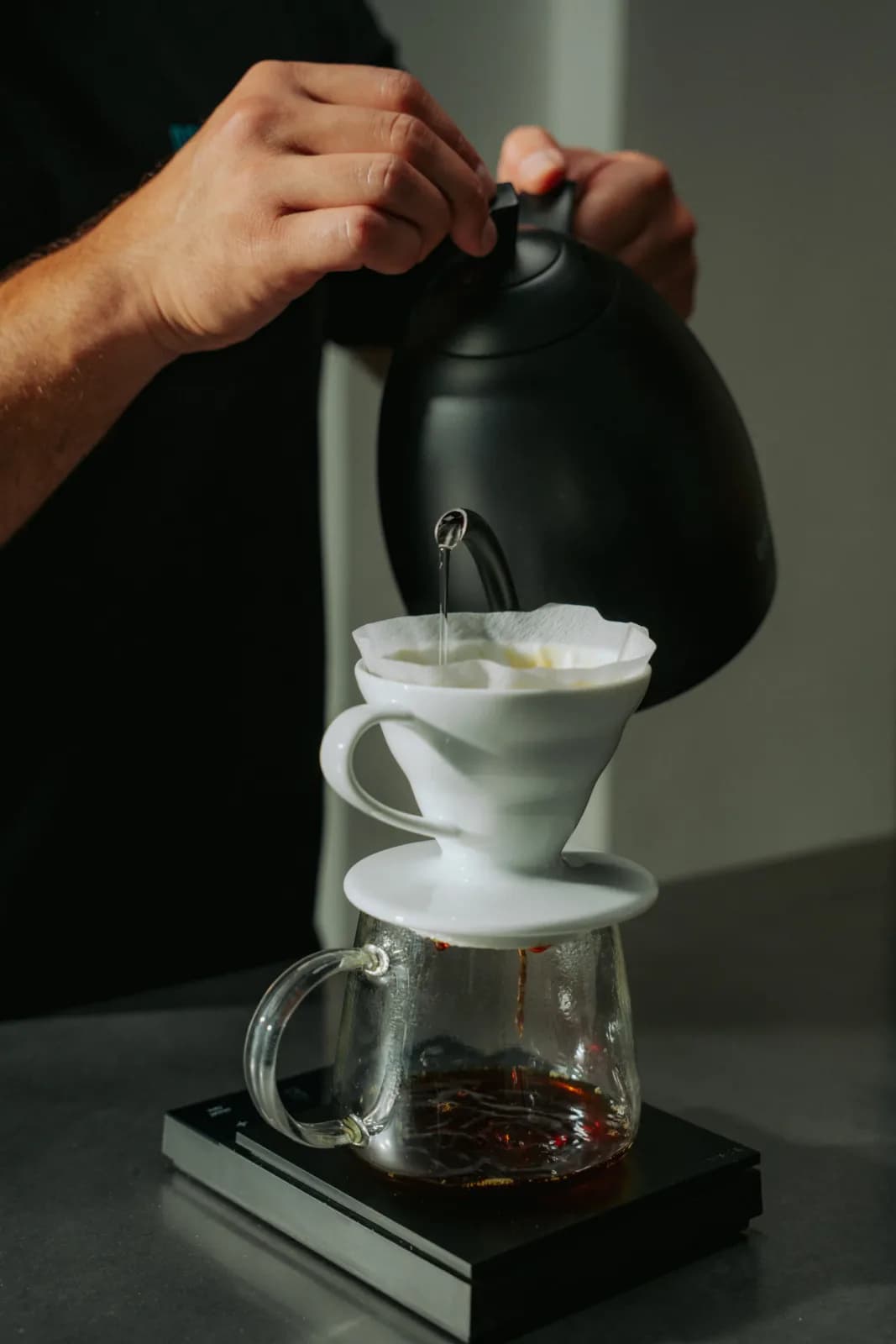
Pour-over is the most obvious way to make filter coffee without a machine. You place a paper filter in a ceramic, glass or plastic cone, add ground coffee and pour hot water over it in several stages. The result is a clear, aromatic cup that usually beats the machine on flavor, because you control the temperature and pace yourself.
You’ll find a detailed step-by-step guide with a recipe in our pour-over V60 guide. If you only need one cup, a small dripper for 1 to 2 cups is all you need.
2. French press: coffee without a paper filter
The French press is the best-known way to make coffee without filter paper. Coffee and water steep together in the press, then you push a metal mesh down to separate the grounds. Because the metal mesh lets oils and fine particles through, the coffee tastes heavier and fuller than from a paper filter.
- Guideline: 30 g of coarsely ground coffee to 500 ml of water
- Pour in the water, stir and put the lid on without pressing
- Let it steep for about 4 minutes, then gently stir or skim off the crust on top
- Slowly press the plunger down and decant the coffee right away so it doesn’t keep extracting
A tip for less sediment: after steeping, wait a few more minutes for the grounds to settle, and only press the plunger to just below the surface.
3. Coffee sock and cloth filter
A coffee sock is a cotton bag on a ring or handle. It’s the traditional way to filter coffee and is still common in many Latin American countries today. You can use it like a pour-over dripper and let the water run through, or hang it in a pot and let the coffee steep in it for a few minutes.
Cloth holds back more particles than metal but lets more oils through than paper. This makes the coffee round and soft. Care is key: after each use, rinse the filter with hot water only, no detergent, and let it dry thoroughly or keep it damp in a closed container in the fridge. Otherwise it quickly picks up rancid smells.
4. The pot method: coffee with nothing else
The simplest method needs no filter at all. With so-called cowboy coffee, coffee and water steep in a pot, then the grounds settle at the bottom. It works on the stove, when camping and over a fire. The coffee is strong and a little cloudy, but it can taste surprisingly good as long as you don’t let it boil.
- Bring water to a boil in a pot, for example 500 ml for two cups.
- Take the pot off the stove or fire and wait about 30 seconds so the water is no longer bubbling.
- Add about 30 g of coarsely ground coffee and stir well until it’s all wet.
- Put the lid on and let it steep for around 4 minutes. Don’t bring it back to a boil, or the coffee will turn bitter.
- Give it a quick stir and add a small splash of cold water over the surface. This helps the grounds sink faster.
- Wait another 2 to 3 minutes until the grounds have collected at the bottom.
- Pour the coffee slowly and steadily into cups, leaving the last bit with the grounds in the pot.
If you like it clearer, pour the coffee through a fine tea strainer as well. Turkish-style coffee in a small pot works in a very similar way, by the way, but with extremely finely ground coffee.
5. AeroPress: compact and travel-friendly
The AeroPress is a plastic cylinder with a plunger. Coffee and water steep together briefly, then you use air pressure to push the coffee through a small paper filter or a metal disc. It’s quick, easy to clean, and light enough for your backpack.
For a filter-style cup, use a medium-fine grind, about 15 g of coffee to 230 to 250 ml of water and around 1:30 to 2 minutes of steeping. With more coffee and less water you get a concentrate that you can top up with hot water. It isn’t real espresso, though.
6. Backup option: paper towel
If you run out of paper filters, in a pinch you can place a sheet of paper towel in a sieve or funnel. Use unprinted, unscented paper, fold it double and rinse it with hot water before filling. Pour slowly, as wet paper towel tears easily.
Flavor-wise, it’s a compromise: paper towel isn’t made for hot food, often leaves a papery aftertaste and, depending on the manufacturer, may contain binders or other additives. It’s fine for one morning, but not as a long-term solution. Proper filter papers cost very little and are the better choice.
Without a filter: what changes in your coffee
With a French press, the pot method and metal filters, more of the coffee oil stays in the cup. That adds body and mouthfeel. However, these oils contain compounds such as cafestol that can raise LDL cholesterol with regular, heavy consumption. Paper filters hold most of them back. If you need to watch this, filtered coffee is the safer choice.
Which method suits you?
- You want clean flavor and control: pour-over.
- You like full-bodied coffee with little effort: French press.
- You’re on the road or camping: the pot method or AeroPress.
- You want to avoid disposable paper: coffee sock or French press.
One thing applies to every method: the grind size has to be right. Coffee ground too fine makes French press and pot coffee cloudy and bitter, while coffee ground too coarse makes pour-over taste sour. Our guide to the best grinder for filter coffee explains what to look for in a grinder.
Frequently asked questions
How do I make filter coffee without a machine?
The easiest way is with a pour-over dripper: insert a paper filter, rinse it, add medium-fine ground coffee and pour hot water over it in stages. A French press, AeroPress or a pot work too.
Can I make coffee without a filter?
Yes. With the pot method, coarsely ground coffee and hot water steep for about 4 minutes, then the grounds settle and you carefully pour off the coffee. The French press also works without a paper filter.
How do I make coffee without electricity?
Heat the water on a gas stove, camping stove or fire. After that, pour-over, French press, coffee sock, AeroPress and the pot method don’t need any electricity.
Can I use a paper towel as a coffee filter?
As a backup, yes, with unprinted, unscented paper that you rinse with hot water first. It tears easily and can taste papery, so it’s not a long-term solution.
What grind size is right for coffee without a machine?
It depends on the method: coarse for French press and the pot method, medium-fine for pour-over and the coffee sock, fine to medium-fine for the AeroPress.